The Method Used to Make Gold Bars
Project gold bars are typically created straightforwardly from dissolved gold. Nonetheless, the manner by which softened gold is utilized to produce these bars can shift. The three primary sorts of gold bars being fabricated are:
(1) Large cast bars with surmised loads.
(2) Small cast bars (1000 g or less) with explicit loads.
(3) Long-level cast bars, strikingly for the production of stamped bars.
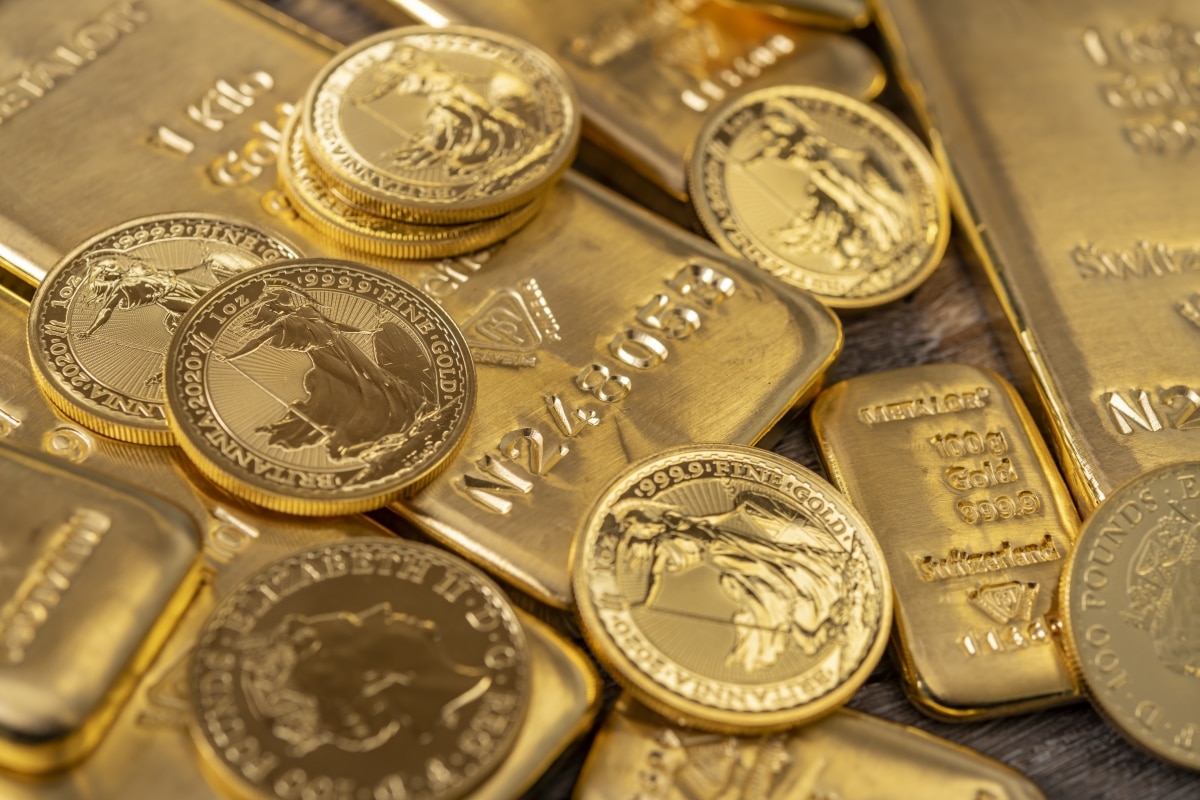
Huge Cast Bars:
Huge cast gold bars are typically made to an estimated weight, so the refined gold at the expected immaculateness has straightforwardly filled the projects
Enlistment heaters are normally used to dissolve gold. Gold is liquefied in masses in huge holding pots. Gold cauldrons are then shifted, and a somewhat modest quantity is filled pre-warmed move pot. At this stage, utilizing vacuum tubes, little examples of gold are tried. Liquefied gold in the exchange cauldron is then moved to pre-warmed, dressed bar molds (for the most part solid metal) of the expected size.
During the pouring cycle, the form sits in an equilibrium. At the point when the equilibrium records the expected load of gold, the pouring is halted. A couple of moments subsequent to the pouring cycle, the bar is dropped into a tank of water for cooling. On the other hand, the form can be permitted bit by bit cool. This cooling methodology is designated "extinguishing". The bar is then cleaned to eliminate stains of any sort and afterward gauged.
Little Cast Bars:
Little cast bars, having explicit weight, are created utilizing refined gold, which has been tried for the necessary pollutant. Refined gold is generally accessible in two fundamental structures: granules and little cut pieces. The decision of fundamental structure relies upon the technique for assembling.
As a matter of some importance, the necessary type of gold is adjusted and the expected sum is gauged. Typically, gold is weighed somewhat more than the heaviness of the bar, to cater to fabricating misfortunes.
Customary strategy: In the conventional little cast bar fabricate technique, dissolved gold is filled molds; this strategy is as yet utilized by numerous makers. Gold is first positioned in a pot of proper volume and is then softened in a heater at a controlled temperature of 1200C. Care ought to be taken to stay away from the defilement of gold.
The softened gold is then filled with a pre-warmed bar shape, which has been dressed in carbon smoke or graphite. From that point forward, the shape is cooled and the bar is cleaned and gauged.
Present-day technique: Using current strategies, a ton of little cast bars can be fabricated all the while. The gold is filled with bar molds of the necessary size. Various molds are all the while taken care of into acceptance heater for softening at a controlled temperature of 1200C. Liquefied gold is then driven into a "Cooling Tunnel". At the point when it emerges, the bars are taken out from projects, cleaned, and afterward painstakingly gauged.
Long Flat Cast Bars:
Long-level cast bars can be fabricated either from cast iron molds in a pack or from a constant projecting machine.
Customary Method: various cast iron blocks of required width, thickness, and length are cinched together upward, so the level base of one shape frames the side of the other form. These molds are loaded up with liquefied gold and afterward cooled. At the point when the gold has set, the molds are unclamped and the bars are eliminated.
Present-day Method: Continuous projecting machine
The cutting-edge techniques for assembling use projecting machines to create a bar load of required width and thickness on a persistent premise.
For more info:-


Comments
Post a Comment